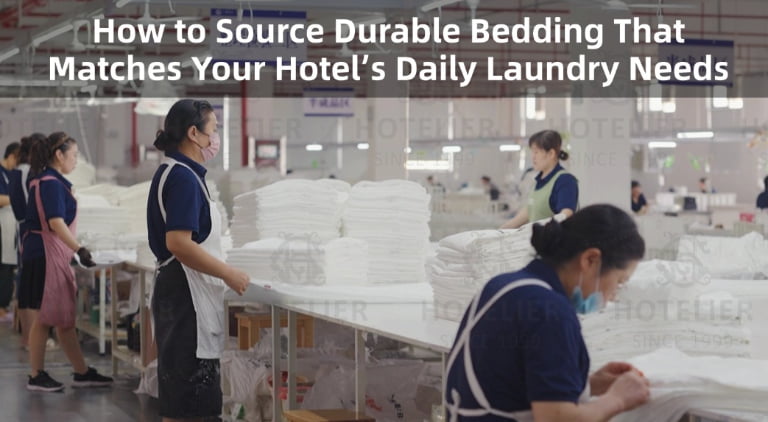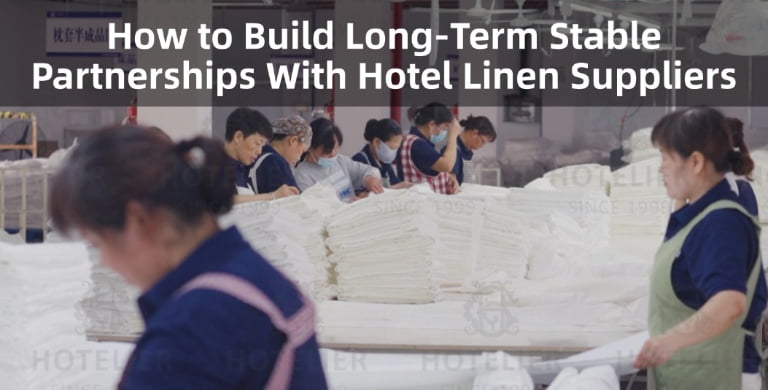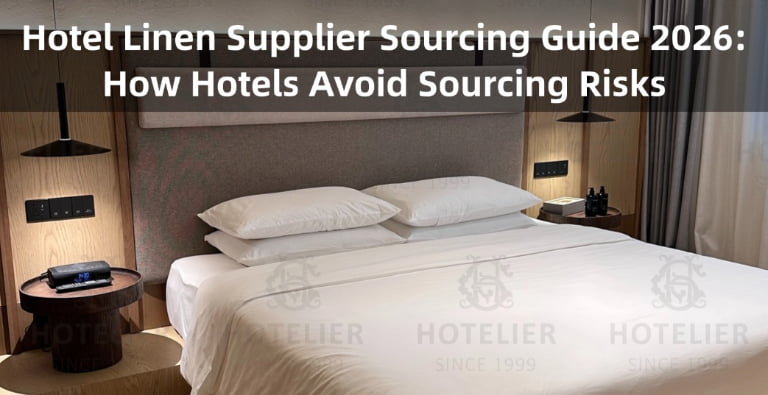
Cross-border procurement of hotel linens is a standardized supply chain solution designed to resolve long-term operational losses caused by mismatched fabric performance, rapid wear under industrial laundering, and oversights in cross-border compliance.
Linens including bed sheets, towels, bathrobes, restaurant napkins and other reusable textiles are consumed frequently by hotels worldwide. Most mid-to-high-end overseas hotels adopt industrial laundering at 60–90°C with alkaline detergents. Conventional linens tend to tear, fade, shrink and pill after merely 20 to 30 wash cycles. Statistics show over 60% of low-cost linens fail to meet hotels’ expected service life. Meanwhile, fabrics exceeding hazardous substance limits may lead to customs detention and guest skin complaints. Such issues mainly stem from simplified textile manufacturing processes, lack of pre-shrinking treatments, and missing environmental testing certifications, which fail to satisfy textile import regulations in Europe, America, Southeast Asia and other regions.
This article sorts out a fully implementable procurement optimization framework. Readers will gain access to supplier screening criteria, full-lifecycle linen cost accounting methodologies, fabric selection matched to local laundering conditions, and cross-border compliance risk prevention tips, enabling hotel procurement teams to avoid common procurement pitfalls.

1 Hotel Linen Procurement: Supplier Screening Checklist
| Core Procurement Challenges | Impacts Caused by Fabric & Manufacturing Deficiencies | Mandatory Cooperation Standards for Suppliers |
| Rapid deterioration under high-temperature laundering | Long-term washing with high heat and strong alkalis damages cotton fibers, creating holes and snapped yarns, driving up frequent restocking expenses | Equipped with integrated fabric mercerizing and setting production lines; samples pass 100 industrial laundering cycles without damage |
| Severe shrinkage after repeated washes | Fabrics without pre-shrinking shrink post-wash, leaving ill-fitting bed sheets that harm guest experience and trigger complaints | Multiple pre-shrinking processes completed at factory; dimensional change remains negligible after repeated washes without affecting bed making |
| Fabric pilling and lint shedding | Low-grade cotton yarns produce pills and loose lint after friction, sticking to guests’ clothes and skin and lowering review scores | Premium long-staple cotton raw materials adopted; finished products resist pilling with minimal initial lint loss during first wash |
| Substandard environmental fabric indicators | Excess formaldehyde or toxic dyes may result in guest allergy compensation claims, or full-container customs seizure and return | Third-party test reports and textile environmental certificates provided per batch, with all hazardous substances compliant with import standards |
| Detached and torn custom embroidered logos | Embroidery areas split and threads fray under high-speed dehydration, damaging unified hotel brand visuals | Double stitching reinforcement along embroidery edges; withstand repeated dehydration without fraying or fabric tearing |
| Obvious color deviation across restock batches | Outsourced weaving and dyeing lead to inconsistent shades between production runs, creating disjointed visual presentation across guest rooms | Integrated in-house weaving, dyeing and sewing; consistent color matching for long-term restocking with no noticeable shade differences |
Core Takeaways
- Fabric selection is determined by local laundering conditions: Suppliers must adjust manufacturing processes based on local washing temperatures and detergent types instead of supplying generic uniform linens.
- Acceptance inspection relies on actual laundering test results: Fabric specification sheets alone are insufficient; all acceptance checks shall adopt the physical condition of linens after simulated repeated hotel laundering as the benchmark.
- Long-term color matching archives for restocking: Natural color variations exist in cotton due to seasonal fluctuations; dedicated dye formulas shall be permanently retained for consistent shades across years of replenishment orders.
- Compliance documents are mandatory for customs clearance: Environmental filing documents are required for EU shipments, while heavy metal test reports are compulsory for US shipments; these documents cannot be processed retroactively.
2 Why This Procurement Guide Delivers Practical Reference Value
Most online textile articles only cover basic parameters such as yarn count and fabric density while ignoring the core high-frequency industrial laundering scenario unique to hotels. All conclusions in this guide are verified through repeated washing trials in offline partner laundries, based on our track record of supplying tailored linens to various types of overseas hotels.We compiled abundant actionable operational insights: low-temperature pre-washing of bed linens to reduce fading, widened linen hems to prevent tearing, multi-stage setting processes to stabilize dimensions. This set of mass-production validated procurement standards helps overseas hotels evade operational risks including cargo return, premature linen obsolescence and guest complaints.
3 How Persistent Fading and Lint Shedding Inflate Hotel Operating Costs
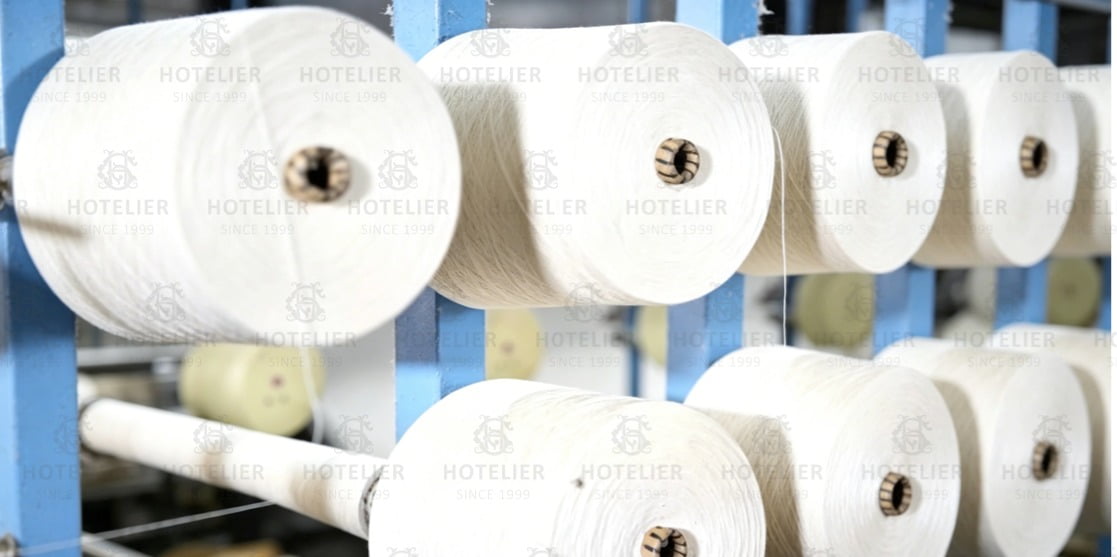
Simplified color fixation and carding processes trigger two prevalent defects: cross-staining during mixed laundering and surface lint loss. Over 60% of negative guest reviews and extra laundering rework costs stem from these two issues. Standardized cross-border linen procurement addresses root causes at the production stage rather than relying on remedial post-washing treatments.
Permanent Color Fixation to Prevent Cross-Staining During Mixed Laundering
Linens with colored piping or prints will easily stain pure white bedding when washed together. Compliant factories implement enhanced color fixation during dyeing to avoid cross-contamination under high-temperature mixed laundering. Once cross-staining occurs, fabrics become irreparable and must be fully replaced.
Multi-Stage Cotton Carding to Eliminate Towel Lint at Source
Low-cost towels cut corners by incorporating excessive short fibers, leading to massive lint loss upon first use and washing. Premium towels undergo multiple carding sessions to remove short lint, plus pre-washing before delivery, resulting in nearly lint-free performance upon room deployment to meet high cleanliness standards.
Complete Desizing Treatment to Prevent Fabric Hardening and Breakage Over Long-Term Use
Residual sizing agents remain on conventionally dyed linens, which gradually harden the fabric and create tiny holes under continuous erosion by alkaline detergents. Qualified linens undergo thorough desizing before shipment to accommodate all industrial detergent types and significantly extend service life.Standardized production control replaces crude manufacturing workflows, allowing qualified suppliers to maintain extremely low mass product defect rates. This production management system has been deployed for dozens of cross-border hotel group linen procurement projects.
4 Reinforced Custom Hemming Craftsmanship: A One-Stop Solution to Dehydration Tearing
Corner tearing accounts for over 40% of premature linen scrapping, the leading cause of replacement costs. High rotational speeds of industrial dehydration machines crack single-stitched hems under tension. Three process optimizations fully resolve this issue:
Standardized Stitch Count for Wash-Resistant Linen Seams
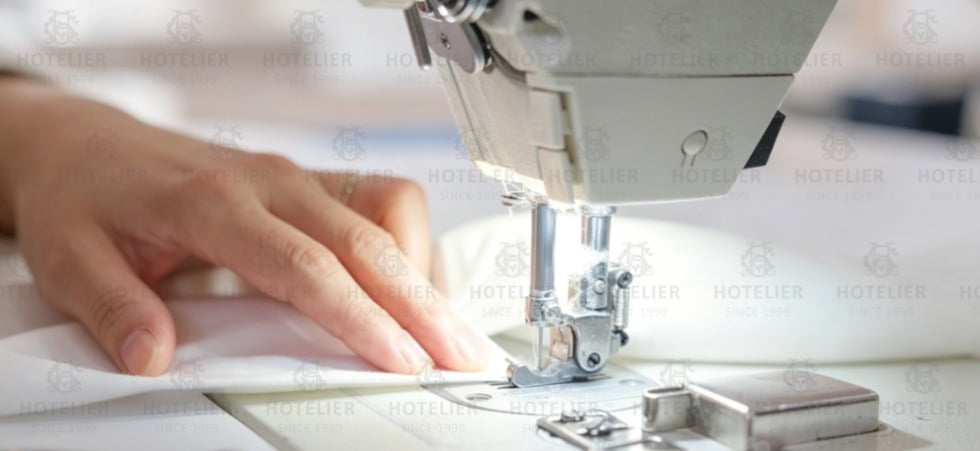
- Minimum production standard: Double stitching on all straight edges, with extra backstitch reinforcement at both ends surrounding embroidery.
- Risks of non-compliance: Loose stitch spacing causes direct hem splitting after multiple dehydration cycles.
- Client benefits: Sharp reduction in corner tearing incidents and lower annual linen restocking volumes.
Composite Yarn Hem Structure for Superior Tensile Toughness
- Stress concentration risk: Pure cotton hems lack sufficient flexibility to withstand prolonged dehydration tension.
- Optimization solution: High-elasticity yarn interlayer embedded within hems while retaining pure cotton outer surface for skin-friendliness.
- Proven performance: No hem splitting or thread breakage after over 100 dehydration test cycles.
Constant-Temperature Curing Post-Production to Release Sewing Internal Stress
- Process standard: All finished linens undergo one day of constant-temperature curing after sewing to eliminate fabric tension generated during stitching.
- Implementation outcome: Minimized fabric curling and deformation during storage and washing, compatible with all short and long-cycle linen management models.
Routine Batch Sampling Inspection to Avoid Supply Disruptions During Peak Travel Seasons
- Testing cycle: Random samples extracted from every large production batch for washing and tensile strength testing.
- Process calibration: Regular calibration of dyeing equipment to prevent shade deviation in subsequent restock orders.
- Implementation outcome: Eliminate emergency restocking surcharges caused by defective goods received during hotel peak tourist seasons.
Uniform enforcement of double stitching, composite elastic hems and post-production stress curing drastically reduces tearing and scrapping rates upon initial delivery. If corner breakage keeps driving up your linen replacement costs, our standardized hemming solution can be rapidly deployed. Feel free to share your hotel project requirements for customized proposals and formal quotations.
5 Fair Linen Quotation Accounting: Full-Lifecycle Cost Comparison of Two Fabric Grades for Bulk Procurement
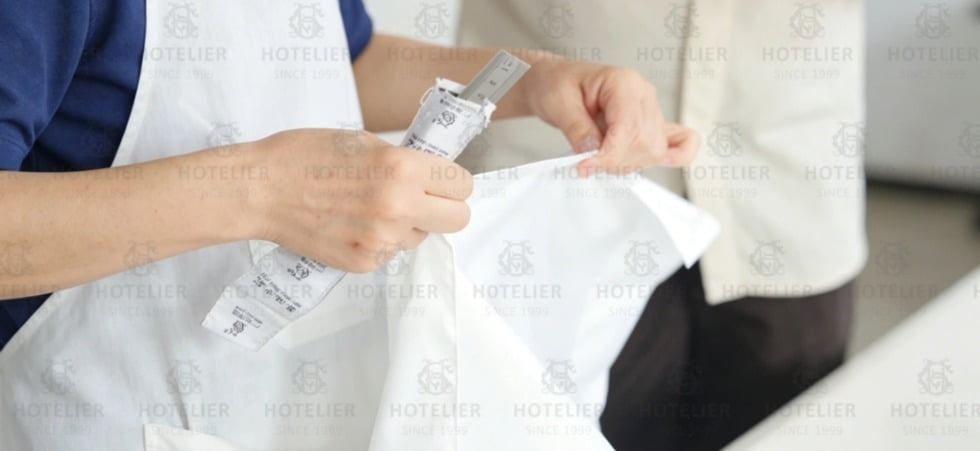
Most procurement staff only compare unit prices while overlooking hidden expenses such as frequent restocking, premature scrapping and customs penalties. Taking a regular order of 20,000 pieces of 300TC pure cotton bed sheets for mid-tier overseas hotels as an example, we established a complete service-life cost comparison model:
| Parameters | Economy-Grade Conventional Linens | Industrial Wash-Resistant Hotel-Grade Linens |
| Initial Unit Procurement Price | $4.20 per piece | $5.15 per piece (22.6% higher upfront cost) |
| Production Lead Time | 22 working days | 28 working days (6 extra days allocated to wash-resistant finishing procedures) |
| Average Usable Wash Cycles | 38 cycles (general industry standard) | 124 cycles (over 2x longer service life) |
| Full-Lifecycle Hidden Loss Expenses | Frequent restocking, massive scrapping, compliance detention risks | Minimal restocking needs, zero compliance fines, greater long-term cost efficiency |
Linen cost optimization requires complete profit and loss calculation rather than mere unit price comparison. For bulk orders above 15,000 pieces, the price premium for wash-resistant linens can be fully recovered within 8 months of hotel operation via reduced restocking demands.
6 Supplier Audit Standards for Cross-Border Orders to EU & North America
Superficial supplier audits overlook core environmental and durability requirements, exposing buyers to cargo detention and asset depreciation risks. This audit checklist is compiled in accordance with textile import regulations of major regions. It quickly filters unstable manufacturers, shortens supplier screening cycles and avoids losses from non-compliant products.
1. Compliant Treatment of Printing and Dyeing Wastewater
EU customs require supporting wastewater compliance certificates for textiles. Suppliers must install full wastewater treatment facilities and provide third-party test documents with every shipment to avoid full-container returns.
2. Stable Fabric Wash Durability with Accessible Laundering Test Samples
Suppliers shall provide documented wash test results proving fabrics resist tearing and deformation after 50 laundering cycles, meeting asset inventory audit standards for overseas hotels.
3. Full-Batch Manual & Instrument Color Difference Inspection for Uniform Visuals
Spot-checking alone fails to detect localized dye shade deviation; all finished goods undergo unified color calibration to maintain consistent room presentation for chain hotels over multi-year restocks.
4. Complete Electronic Batch Traceability Archives Retained Long-Term for Inspection
Digital records of cotton yarn sources, dye batches and finished product test data shall be stored for years to resolve guest complaints and official regulatory audits. Missing documentation may incur substantial fines.
These four baseline criteria covering environmental certifications, wash durability, color difference control and full traceability convert subjective supplier evaluation into clear, implementable audit benchmarks, applicable to all overseas hotel linen bidding and routine replenishment procurement.
7 Linen Procurement Cost Optimization Framework: Lower Total Holding Costs Without Compromising Guest Experience
A widespread industry misconception claims cutting procurement costs necessitates inferior cotton raw materials and thinner fabrics. Verified through mass production trials, optimized weaving, dyeing and packaging workflows reduce long-term comprehensive costs while retaining original softness, whiteness and wash resistance:
Optimized Fabric Weaving Density Uniformity
- Core logic: Adjust loom parameters to fix localized over-dense or loose fabric areas without increasing total cotton yarn consumption. Over-dense fabric sections harden easily and accelerate wear during laundering.
- Cost impact: Even fabric tension reduces friction loss during dehydration and lowers annual linen restocking volumes.
- Client benefit: Fabric thickness and tactile softness remain unchanged with zero negative impact on guest experience.
Cold-Batch Eco Dyeing Replaces Conventional High-Temperature Dyeing
- Existing flaw: Traditional high-heat dyeing damages cotton fibers and drastically shortens linen service life.
- Optimization solution: Low-temperature eco dyeing minimizes fiber degradation and residual dye content simultaneously.
- Practical benefits: Annual bulk procurement eliminates expensive supplementary compliance testing fees and avoids fines for excessive dye residues.
Unified Fabric Whiteness Control Standards
- Manufacturing specification: Regulate bleaching auxiliary dosage without excessive fluorescent whitening agents to comply with textile control regulations in Europe and America.
- Implementation outcome: Prevent customs detention triggered by excess fluorescent agents and consistent linen whiteness across years of restocks.
Moisture-Balanced Packaging Optimization for Ocean Freight
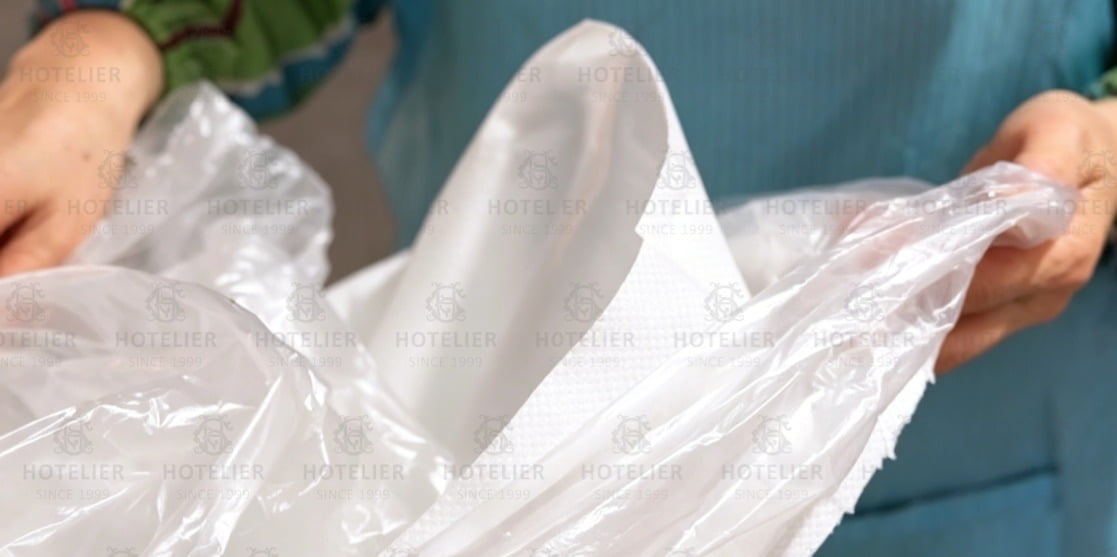
- Processing method: Stabilize internal packaging humidity with calcium chloride desiccants to counter high heat and humidity inside ocean containers.
- Field data: Optimized packaging drastically reduces mold growth risks for sea shipments.
- Implementation benefit: No additional packaging expenditure while eliminating losses from mold-damaged cargo during transoceanic transport.
Combining uniform fabric weaving, eco-friendly dyeing and moisture-proof packaging optimization, overseas hotels can substantially cut full-lifecycle linen expenses without downgrading guest service standards or compliance levels.
FAQs
1. How to prevent linen mold growth inside containers during large-volume ocean shipments?
Adopt vacuum-sealed moisture-proof packaging paired with calcium chloride desiccants to stabilize container humidity. EU customs-recognized fumigation exemption certificates are attached with each shipment to streamline clearance procedures.
2. What color tolerance standards apply to long-term restocking for chain hotels?
Global hotel chains require zero visible color difference between restock batches; standards can be moderately relaxed for independent boutique hotels. We permanently archive exclusive custom dye formulas for clients to guarantee consistent shade matching for all replenishment orders.
3. Why do qualified linens turn stiff after multiple washes?
This is mainly caused by mineral deposits from hard washing water adhering to fabric surfaces. We add anti-mineral deposition finishing during production to retain fabric softness even after 100 wash cycles.
4. Can customized linen orders be quickly delivered for cross-border transportation?
We operate self-owned manufacturing facilities with a daily fabric output of 60,000 meters and over 500 sets of looms, embroidery machines, sewing and filling equipment, supporting emergency restocking for overseas hotels during peak travel seasons.
5. How do five-star hotels effectively control lint shedding on bath towels?
Select long-staple cotton with standardized loop pile height; all finished towels undergo pre-washing lint removal before delivery, delivering nearly lint-free performance upon initial room setup.
6. Can exclusive embroidery patterns in hotels be protected?
A legally binding mutual non-disclosure agreement is signed prior to receiving embroidery drafts and color matching files. All design materials are stored in encrypted cloud storage with restricted internal access permissions.
Summary
Cross-border procurement of linens for overseas hotels constitutes a comprehensive system. Most procurement losses arise from overemphasis on unit prices and basic fabric parameters while overlooking recurring hidden restocking costs. Sourcing from integrated manufacturers with in-house weaving, dyeing, sewing and wash testing capabilities delivers one-stop risk mitigation and long-term operational cost reduction for hotels.
If you require linen sample testing or customized quotations, share your hotel room count and brand positioning with HOTELIER, and a dedicated procurement proposal will be issued within 24 hours.